
Insights · May 25, 2026 · 5 min read
Preparing for the AI shift
AI is reshaping white-collar work first. Long-term relevance comes from shifting from doing to directing — toward the judgment-intensive roles that stay human.
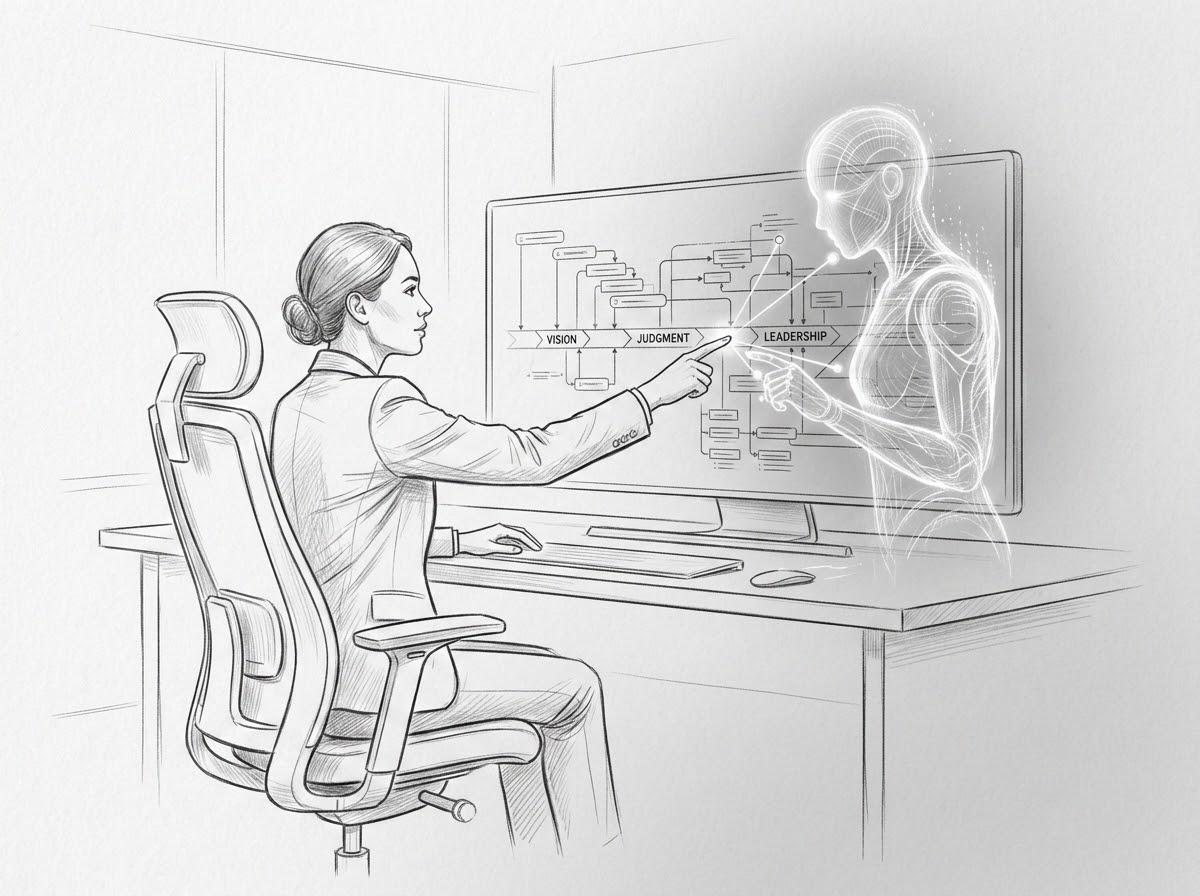
The narrative around AI often suggests that automation is exclusively a threat to manual labor. But the most recent data from Anthropic's 2026 Labor Market Impact Report reveals a more nuanced reality: highly educated, white-collar professions are currently at the forefront of AI integration.
While "observed exposure" to AI is highest in roles like programming and financial analysis, many white-collar professions remain resilient. The key to long-term relevance isn't avoiding AI — it's evolving with it. For those looking to sharpen their edge in this shifting landscape, Prep Room offers resources to help you pivot toward the skills that define the next generation of professional value.
Resilience: what stays relevant?
The Anthropic data indicates that AI excels at routine cognitive execution — tasks that are predictable, digital-first, and rule-based. Conversely, roles that require judgment-intensive work are proving the most resistant to full automation.
If you are in a white-collar field, your long-term security likely lies in shifting away from "doing" and toward "directing." The roles that remain most relevant involve:
- Complex decision-making under uncertainty. AI can synthesize data, but it cannot navigate the ambiguity of a gut-check call or a high-stakes ethical dilemma. Weighing incomplete information against organizational goals remains inherently human.
- Cross-functional leadership. An AI can draft a report, but it cannot align stakeholders with competing interests or lead a team through a cultural transformation. Negotiation, empathy, and organizational politics stay a uniquely human capability.
- Strategic accountability. As teams get smaller and more agile, the most valuable professionals are those who take ultimate responsibility for outcomes — standing behind a decision, interpreting AI-generated insight, and refining it into strategy.
- Human-in-the-loop integration. Resilience increasingly belongs to professionals who use AI as a co-pilot — delegating repetitive drafting, data assembly, and summarizing so they can focus on high-level interpretation and creative ideation.
Staying ahead with Prep Room
The gap between AI's theoretical potential and its actual workplace impact is a transition period. As the Anthropic research notes, while some entry-level tasks are being automated, new categories of work are emerging that demand a broader set of skills.
At Prep Room, we focus on preparing professionals to navigate this shift. In the Interview Prep section, drill a category by testing your AI-readiness with deep, focused questions.
Whether you're aiming to transition into a more resilient leadership role or simply want to integrate AI tools into your daily workflow, the goal is to position yourself as an "AI-enabled" professional. Explore customized courses in the Upskill segment.
Rather than viewing AI as a replacement, treat it as a tool that lets you graduate from the "execution" level of your career to the "strategy and judgment" level — where the true value in the modern white-collar workforce is now concentrated.
References
- Anthropic. (2026). Labor market impacts of AI: a new measure and early evidence. anthropic.com/research/labor-market-impacts
preproom.ai — end-to-end interview preparation